
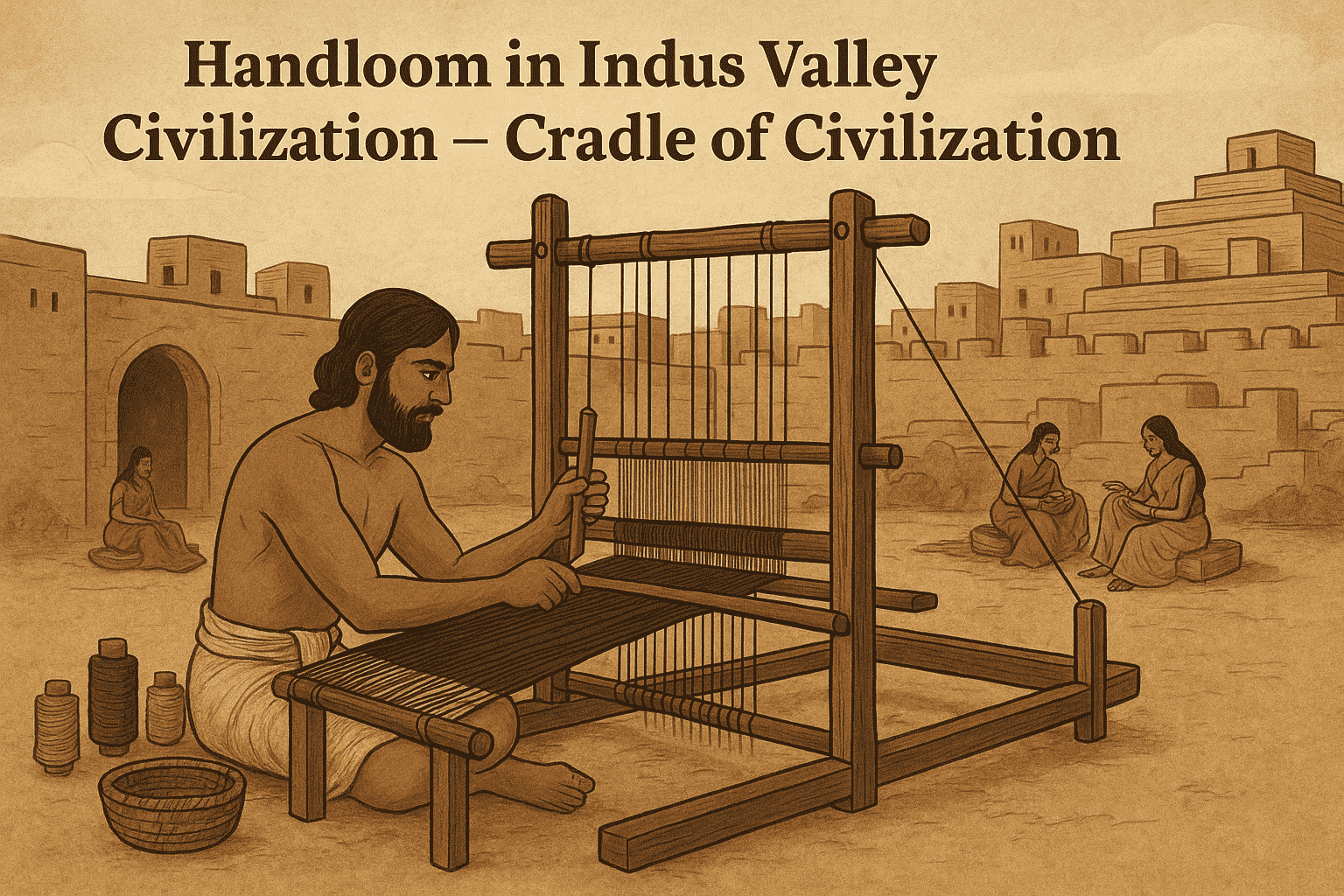
The Indus Valley Civilization, flourishing around 2600–1900 BCE, stands as one of the world’s earliest urban cultures and is renowned for its remarkable advancements in textile craftsmanship, particularly handloom weaving. Archaeological discoveries at sites like Harappa and Mohenjo-daro offer compelling evidence that handloom weaving was a well-established and sophisticated practice in this ancient society.
Cotton was a cornerstone of the Indus Valley’s textile industry. The fertile alluvial plains of the region provided ideal conditions for cotton cultivation, making it a significant agricultural activity. Once harvested, cotton fibers were meticulously spun into thread, often by women using handheld tools such as wooden spindles. This spinning process transformed raw cotton into strong, fine threads suitable for weaving. The presence of spindles and spindle whorls among the archaeological finds further confirms the prevalence of spinning and weaving activities in the civilization.
The weaving process itself was carried out on simple but effective handlooms. Artisans skillfully combined different colored threads to create fabrics with intricate patterns and visual appeal, demonstrating both technical proficiency and artistic sensibility. These textiles were not only functional—providing comfort and protection in the region’s climate—but also aesthetically valued. The fabrics produced by Indus Valley weavers were highly regarded for their quality and beauty, and there is evidence that they were traded with distant civilizations such as Egypt, Rome, and China, underscoring the civilization’s far-reaching influence.
In addition to cotton, other fibers such as wool, jute, and possibly even wild silk were known to the inhabitants of the Indus Valley. Recent discoveries of silk thread inside copper beads at Harappa suggest that the civilization was familiar with wild silk, although there is no conclusive evidence that silk was woven into fabric at that time. The use of natural dyes and the existence of dyeing vats at archaeological sites further highlight the advanced nature of their textile production.
The legacy of handloom weaving in the Indus Valley Civilization is profound. It set the foundation for India’s enduring textile traditions, which have evolved over millennia but continue to draw inspiration from these ancient roots. The self-reliant, community-based model of textile production—spinning, dyeing, and weaving carried out within households—remained a hallmark of Indian handloom for centuries. Today, the spirit of the Indus Valley’s textile artistry lives on, celebrated for its ingenuity, sustainability, and cultural significance.
Handloom in the Indus Valley Civilization was not merely a craft but a sophisticated industry that combined agricultural innovation, technical skill, and artistic creativity. Its legacy endures in the continued prominence of handloom weaving in India and its influence on global textile traditions.