
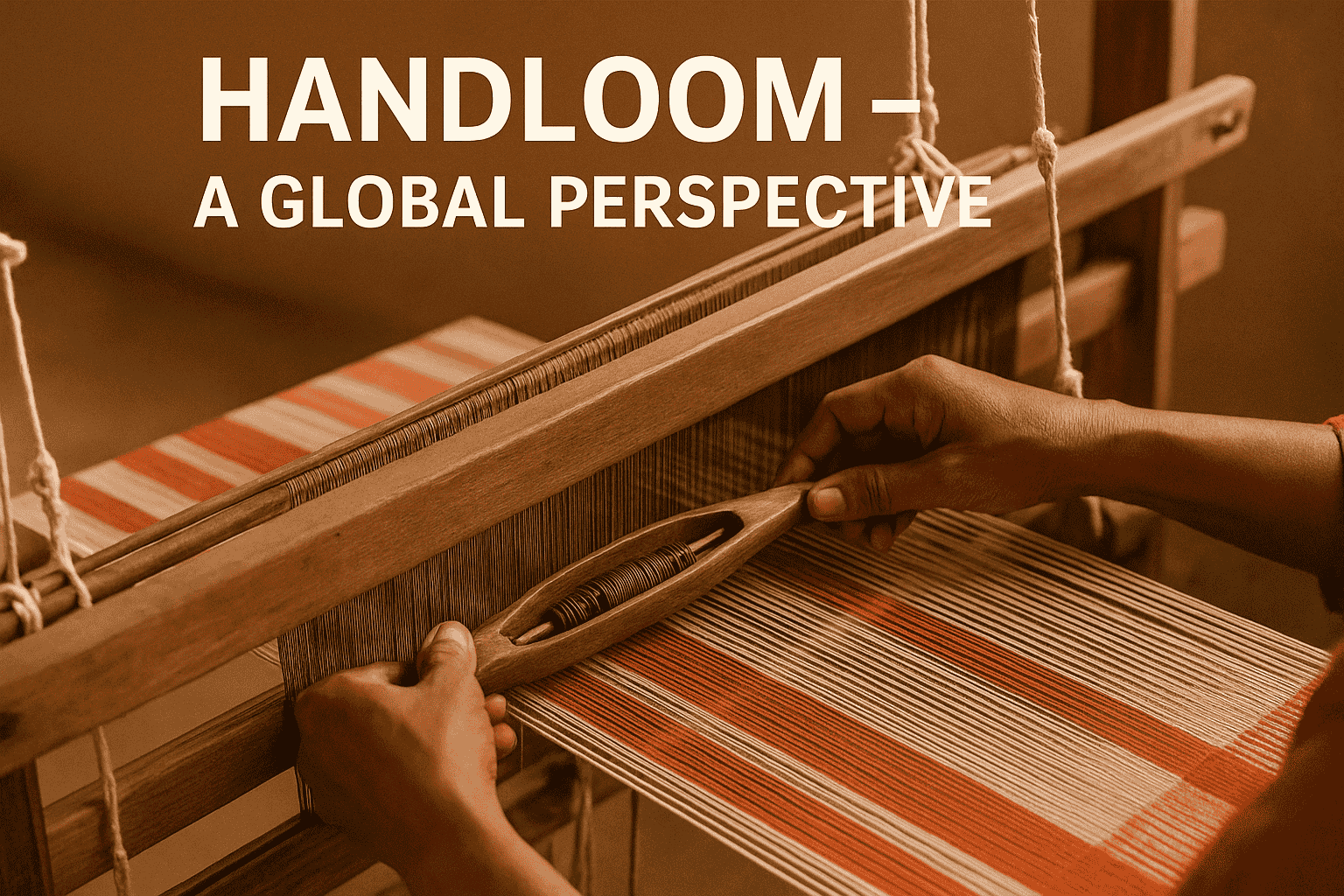
Handloom, the art of weaving fabric by hand using simple, non-electric looms, is both an ancient craft and a living tradition that continues to shape cultures and economies around the world. In the global context, handloom is more than just a method of textile production; it is a symbol of heritage, sustainability, and artisanal excellence.
At its core, handloom involves skilled artisans using wooden or bamboo frames to weave fabrics, often from natural fibers such as cotton, silk, wool, or jute. This process is typically carried out in cottage industries, where families or small communities are involved in every stage, from spinning the yarn to dyeing and weaving. Unlike mechanized textile production, handloom requires no electricity, making it one of the most eco-friendly ways to produce cloth.
Historically, handloom weaving has been integral to societies across continents. In India, for example, the tradition dates back to the Indus Valley Civilization and played a pivotal role in the Swadeshi movement during the struggle for independence. Indian handloom fabrics were prized in ancient Rome, Egypt, and China, and today, each region of India boasts its own distinctive weaving styles and motifs, reflecting local culture and artistry. Similar traditions exist in other parts of Asia, Africa, and Latin America, where handloom weaving is deeply embedded in the cultural fabric and continues to be practiced as a means of preserving identity and heritage.
From an economic standpoint, the handloom sector is a major source of livelihood, especially in rural areas of developing countries. In India alone, it provides employment to over 4.3 million people, making it the second-largest employer after agriculture. The industry also supports allied sectors such as spinning, dyeing, and retail, further boosting local economies. Globally, handloom products are highly valued for their craftsmanship, uniqueness, and eco-friendly qualities, with key export markets including the United States, United Kingdom, Japan, Germany, and France.
Despite its strengths, the handloom sector faces significant challenges in the modern era. The rise of mechanized textile production has led to stiff competition, driving down prices and threatening the livelihoods of traditional weavers. Issues such as obsolete technology, lack of working capital, and weak marketing infrastructure further hinder the sector’s growth. Additionally, the cost of natural fibers has risen, making handloom products less affordable for the average consumer, while the wages of weavers have stagnated. As a result, many artisans are abandoning the craft in search of more stable income sources, and some communities are experiencing extreme poverty.
Nevertheless, handloom endures as a timeless tradition. Each piece of handloom fabric is unique, reflecting the mood and skill of the individual weaver. The flexibility and versatility of handloom allow for continual experimentation and innovation, producing designs that cannot be replicated by machines. In recent years, there has been a renewed interest in handloom products, driven by a global movement toward sustainable and ethically produced textiles. Governments and organizations are working to promote handloom through export incentives, skill development programs, and e-commerce platforms, connecting artisans with global markets and helping to preserve this invaluable heritage.
In conclusion, handloom in the global context is a testament to human creativity, resilience, and cultural diversity. It stands at the crossroads of tradition and modernity, offering a sustainable alternative to mass-produced textiles while celebrating the artistry of generations of weavers. As the world becomes more conscious of environmental and ethical issues, the handloom sector has the potential not only to survive but to thrive, provided it receives the support and recognition it deserves.